Confidence
For pre-teens who second-guess themselves, hesitate socially, or need stronger self-belief before the teenage years arrive.
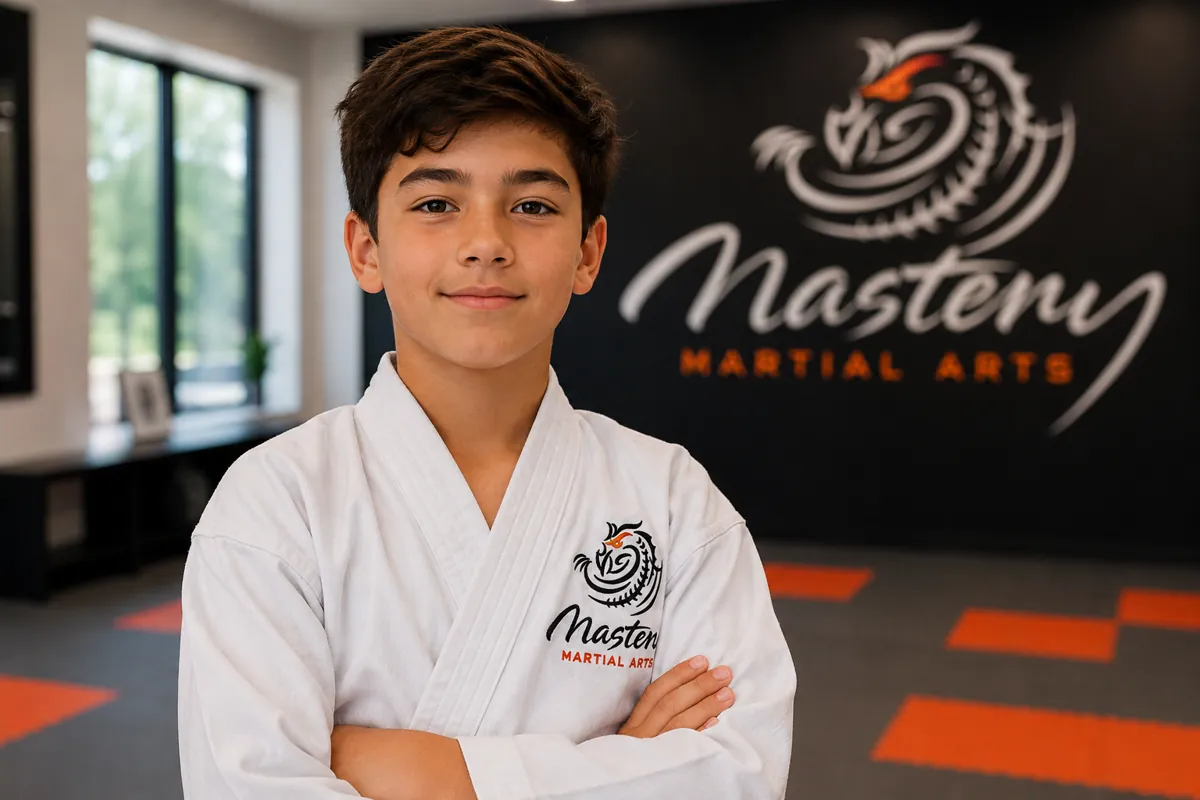
Ages 10–12 Program
Strong On The Inside.
Ready For The World.
The Pre-Teen Martial Arts program at Mastery Martial Arts™ helps students ages 10–12 build confidence, leadership, discipline, resilience, and the emotional strength to navigate school, friendships, social pressure, and life.

Ready to see a class in action?
Click for Schedule & Pricing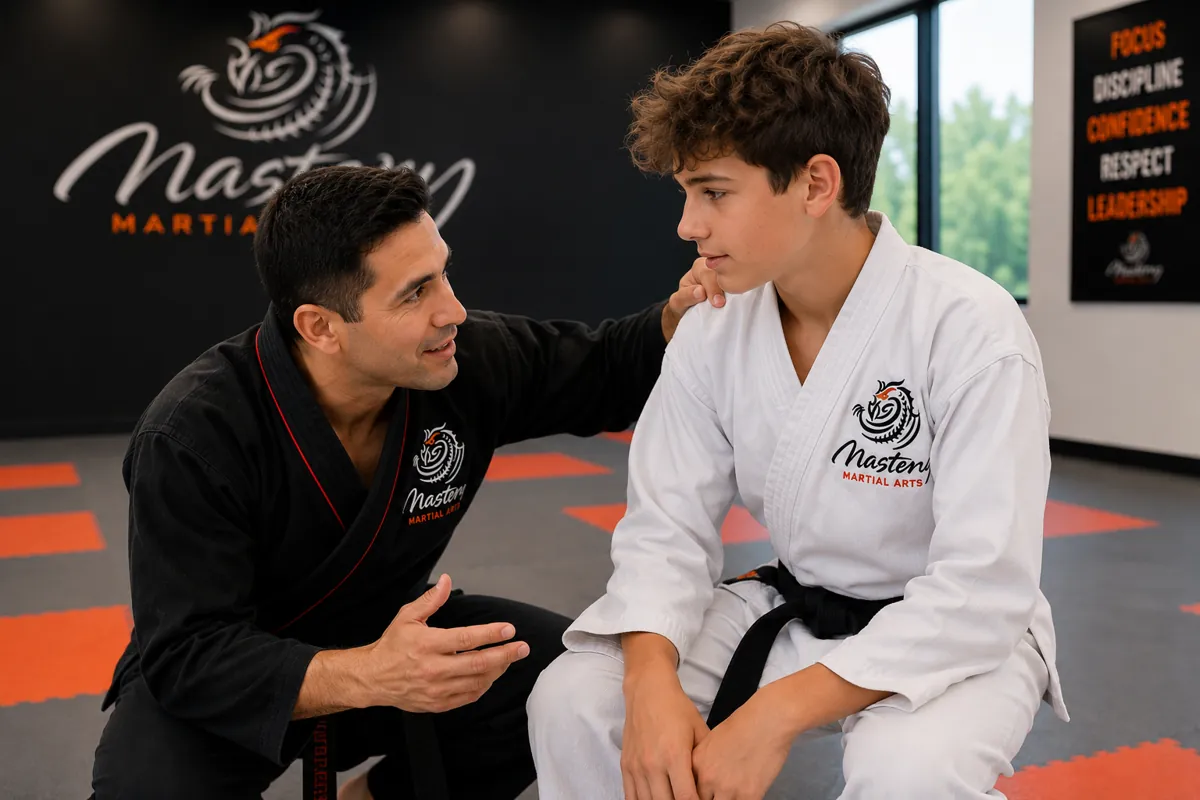
Confidence under pressure
Confidence is not talking loud. Confidence is trusting yourself. It is the ability to take action even when the outcome is not guaranteed, to stay present when you feel pressure, and to keep moving instead of folding the second something feels uncomfortable.
That kind of confidence is earned through effort. It is built through challenge. It grows when a child experiences moments that would have shaken them before and learns they can handle more than they thought. In martial arts, that process happens every week through repetition, coaching, correction, and progress.
Instructor mentorship is a major part of why this matters. Pre-teens need adults who can challenge them honestly while still believing in them deeply. They need someone who can say, “You’re capable of more,” and then stay with them while they rise to meet it. Encouragement at this age is not empty praise. It is clear guidance, accountability, and real support while growth is happening.
At Mastery Martial Arts™, students are coached through uncertainty, not protected from all of it. They learn that pressure does not have to mean panic. Mistakes do not have to mean shame. Challenge does not have to mean “I’m not good enough.” It can mean “I’m growing.” That shift changes how kids handle school, friendships, social situations, and life beyond the mat.
Why this window matters
These are the years children begin deciding who they will become.
Identity And Self-Belief
Ages 10–12 are the years a child quietly decides who they are. Identity formation accelerates during this stage, and the inner story a pre-teen tells themselves about who they are, what they are capable of, and what they deserve becomes the lens for everything that follows. Self-esteem development at this age is no longer about cheerful praise. It is about real evidence — moments where the child experienced challenge, recovered, and proved something to themselves.
Confidence for preteens is not built by protecting them from struggle. It is built by helping them face manageable challenge while staying supported. Each time a pre-teen pushes through hesitation, gets coached through a mistake, and earns a visible win, they collect another piece of evidence that they are capable. Over time, those pieces of evidence become a belief system — the kind of inner voice that does not collapse the first time someone questions it.
Identity development for kids in this window is also about personal standards. Pre-teens start noticing the difference between people who hold themselves to something and people who drift. Mastery Martial Arts™ surrounds students with both — instructor mentors who model standards, and peers who are being coached toward the same. That culture quietly invites every child to raise their own bar.
Leadership And Communication
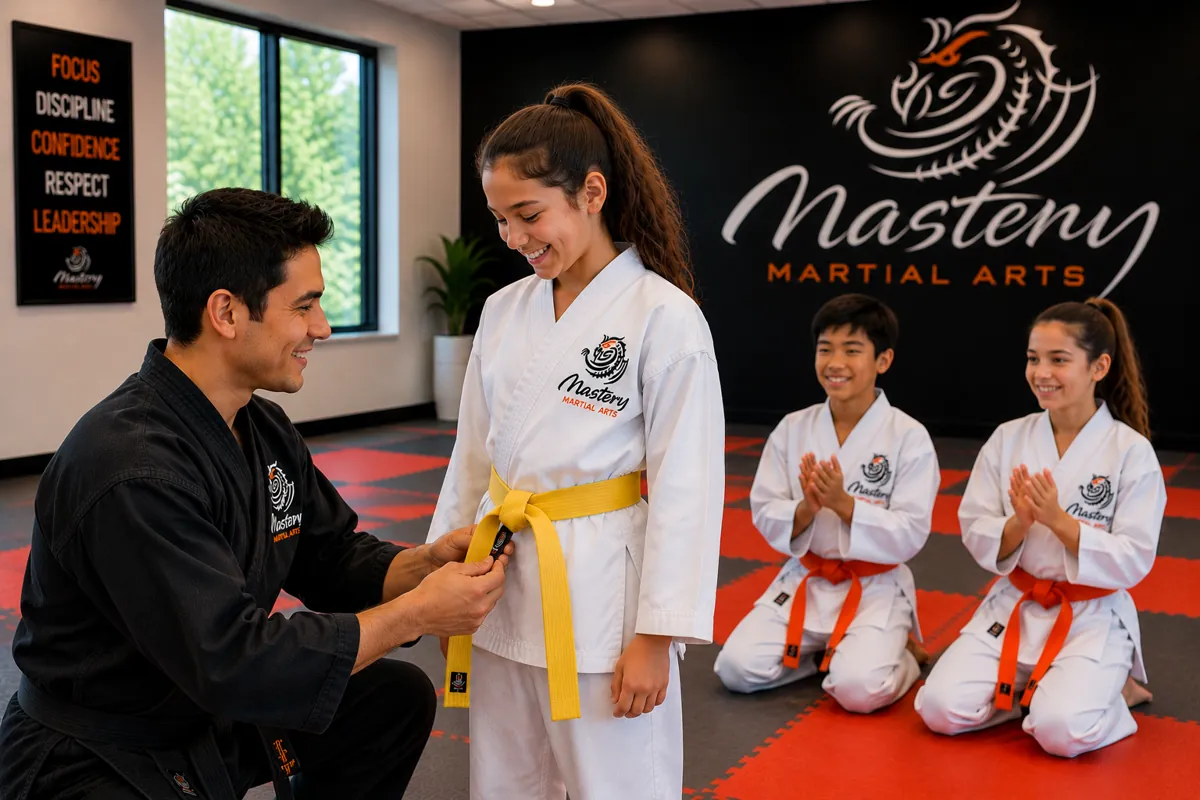
Leadership classes for kids ages 10–12 are not about putting a child in charge. They are about training the habits real leaders rely on — speaking clearly, listening fully, taking responsibility, and showing up consistently. Public speaking, even in small doses, becomes a powerful confidence builder during this stage. Pre-teens who learn to use their voice in front of others stop shrinking when it matters most.
Communication skills for children deepen quickly when practiced in a structured environment. In class, students greet instructors, respond clearly to direction, encourage classmates, and learn to ask for help without shame. Those small communication moments compound. Within months, parents often notice their pre-teen handling adult conversations, classroom participation, and friend dynamics with noticeably more poise.
Leadership development at this age also teaches influence. A pre-teen begins to realize that how they show up affects the people around them. They notice when their attitude lifts the room or weighs it down. That awareness becomes the foundation for the kind of teenager who leads with character instead of being pulled by whoever is loudest in the room.
Confidence In Social Situations
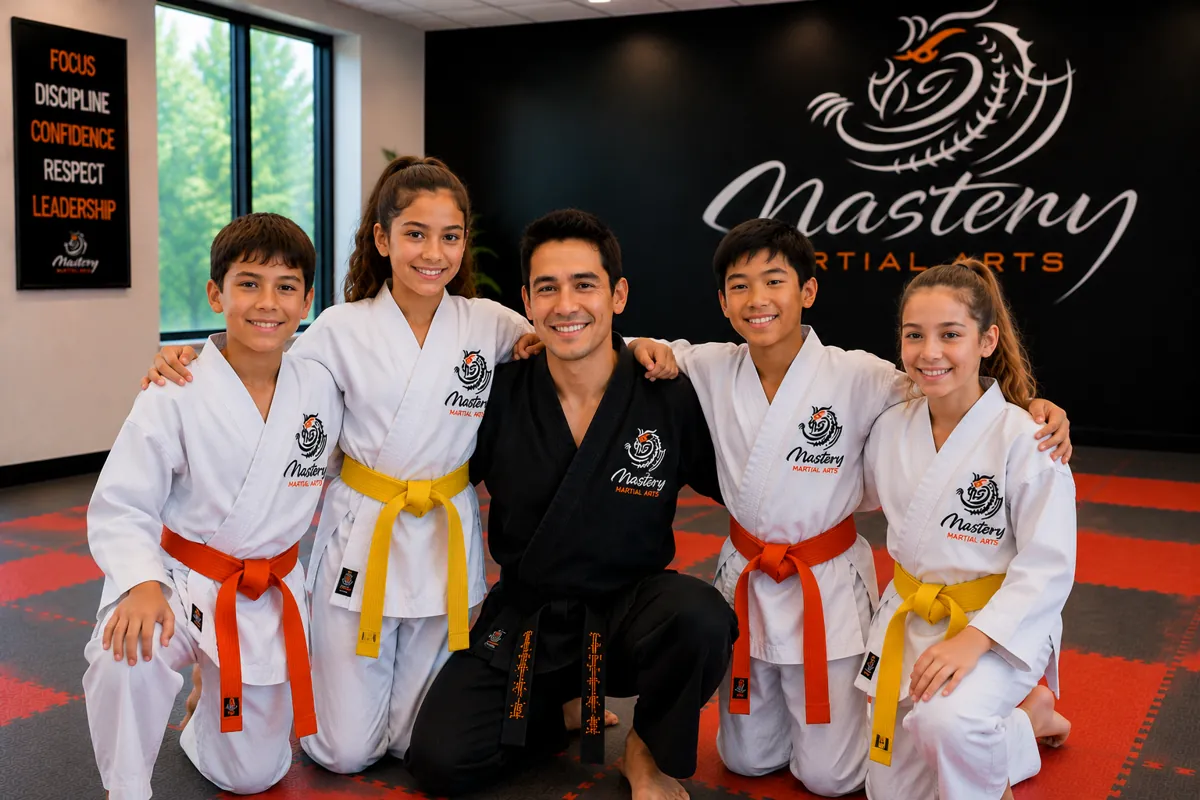
Social confidence becomes one of the most important skills a pre-teen can develop. Peer pressure intensifies between 10 and 13, friendships become more layered, and belonging starts feeling like currency. A pre-teen who feels uncertain socially often shrinks parts of themselves to fit in. A pre-teen with real confidence around peers can stay themselves even when the room is pulling in another direction.
Friendship development at this age is shaped by how a child carries themselves. Pre-teens who make eye contact, speak clearly, and engage warmly tend to attract healthier friendships and avoid the kinds of dynamics that feed on insecurity. Mastery Martial Arts™ trains those behaviors every class — not as performance, but as practiced habits that become natural over time.
Standing up for themselves is the deeper outcome. Children who have repeatedly experienced themselves as capable, calm, and grounded are far more likely to set healthy boundaries with peers, walk away from situations that do not honor them, and make the choices they will be proud of later. Social confidence is not loud. It is steady — and steadiness is exactly what we coach.
Resilience And Mental Toughness
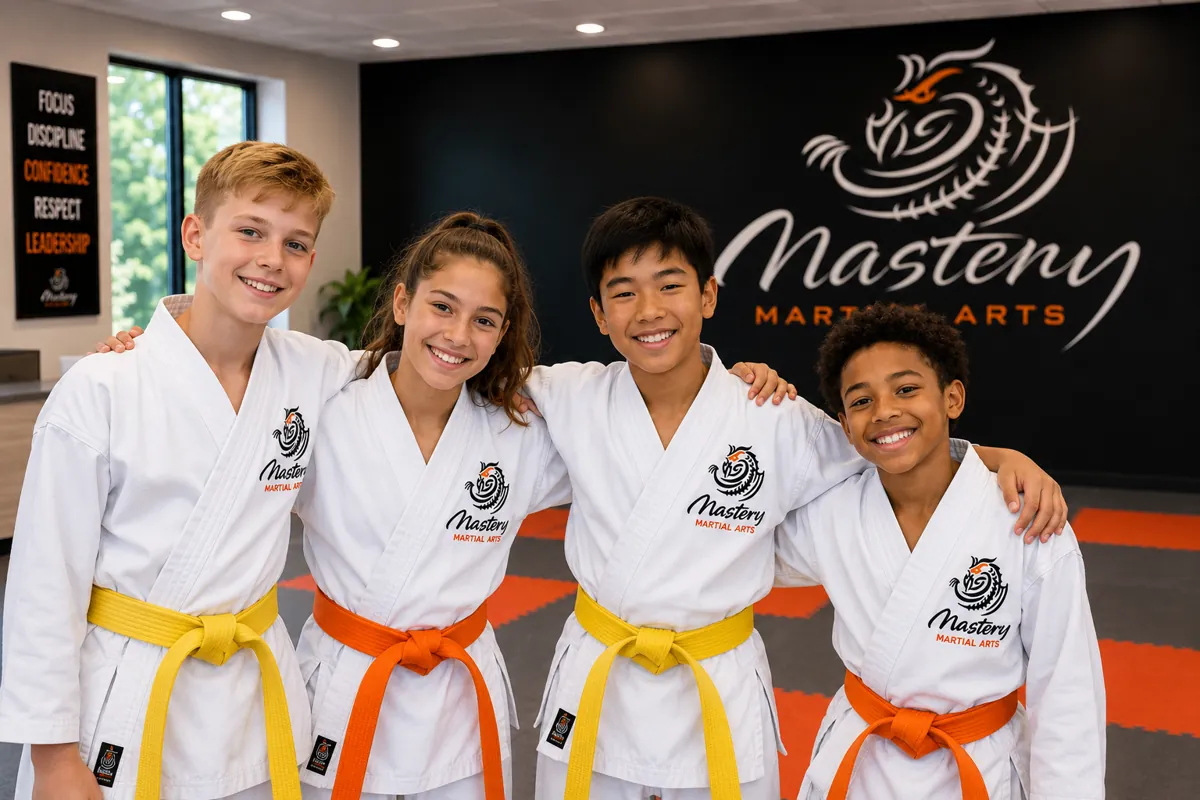
Resilience for kids in this window is not about being tough on the outside. It is about being steady on the inside when life pushes back. Setbacks land harder at ages 10–12. A bad grade, a friendship conflict, a missed goal, a moment of embarrassment — all of it gets replayed more privately and more personally than it did a few years ago. Without coaching, many pre-teens begin protecting themselves by avoiding challenge altogether.
Mental toughness for children grows through repeated small experiences of struggle and recovery. In martial arts class, a child misses a technique, gets coached, tries again, and improves — every single class. That cycle slowly rewires how they interpret hard things. Challenge becomes opportunity instead of threat. Mistakes become information instead of identity.
Emotional resilience also shows up at home. Pre-teens who have practiced perseverance on the mat are more likely to push through homework they would have abandoned, finish projects they would have dropped, and recover after disappointments that would have once derailed them for days. Grit is not a personality trait. It is a habit — and habits can be built.
Self-Discipline And Responsibility
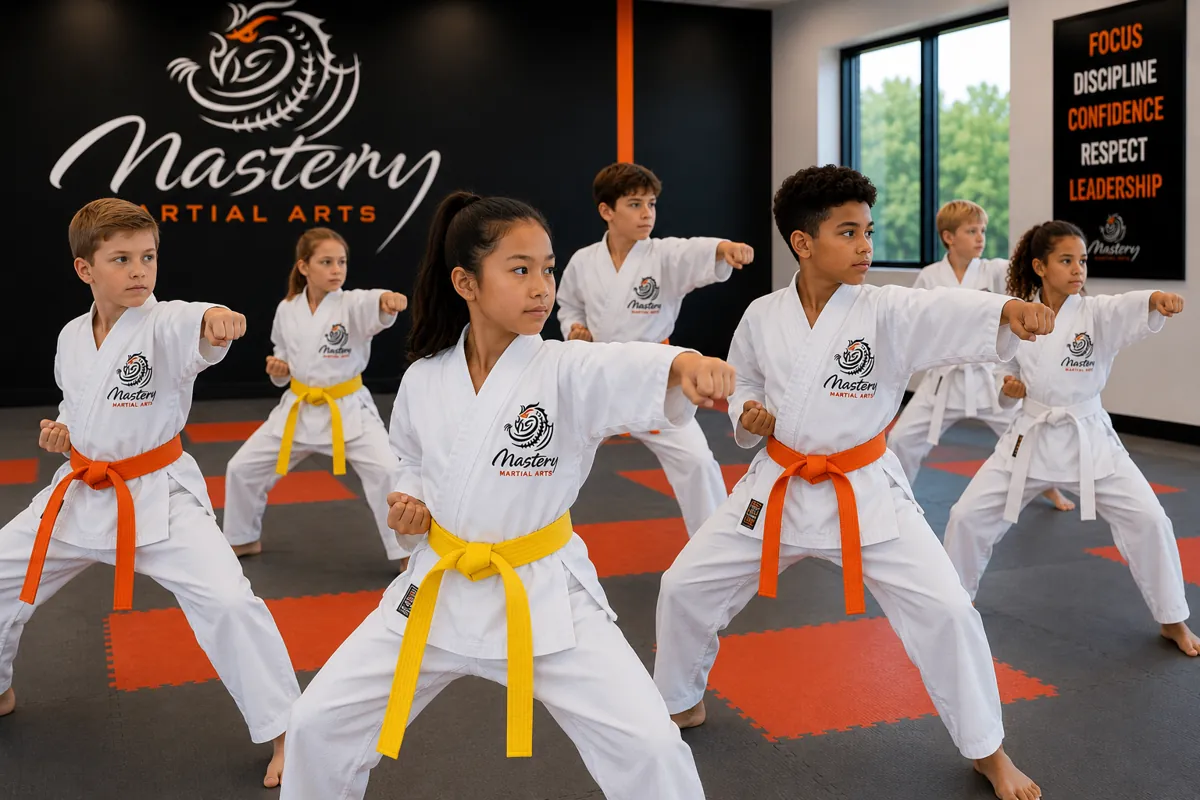
Self discipline for kids is one of the most requested outcomes parents bring to Mastery Martial Arts™. By ages 10–12, the gap between children who have built personal accountability and children who have not is becoming visible — in school performance, in how they handle their commitments, and in how they manage themselves when no adult is watching. Self-discipline is not a personality. It is a trained skill.
Responsibility development happens in small, repeatable moments. Pre-teens are expected to remember their uniform, arrive on time, listen the first time, and follow through on what they said they would do. Those expectations are loving, not harsh — but they are consistent. Over time, the child stops needing reminders. They start owning the routine themselves.
Positive habits for children compound. A pre-teen who has practiced consistency, follow-through, and accountability in class is far more likely to apply the same habits to homework, chores, and personal goals. By the time they reach the teenage years, those habits are no longer effort. They are identity — which is exactly what we are training them to build.
Preparing For The Teenage Years
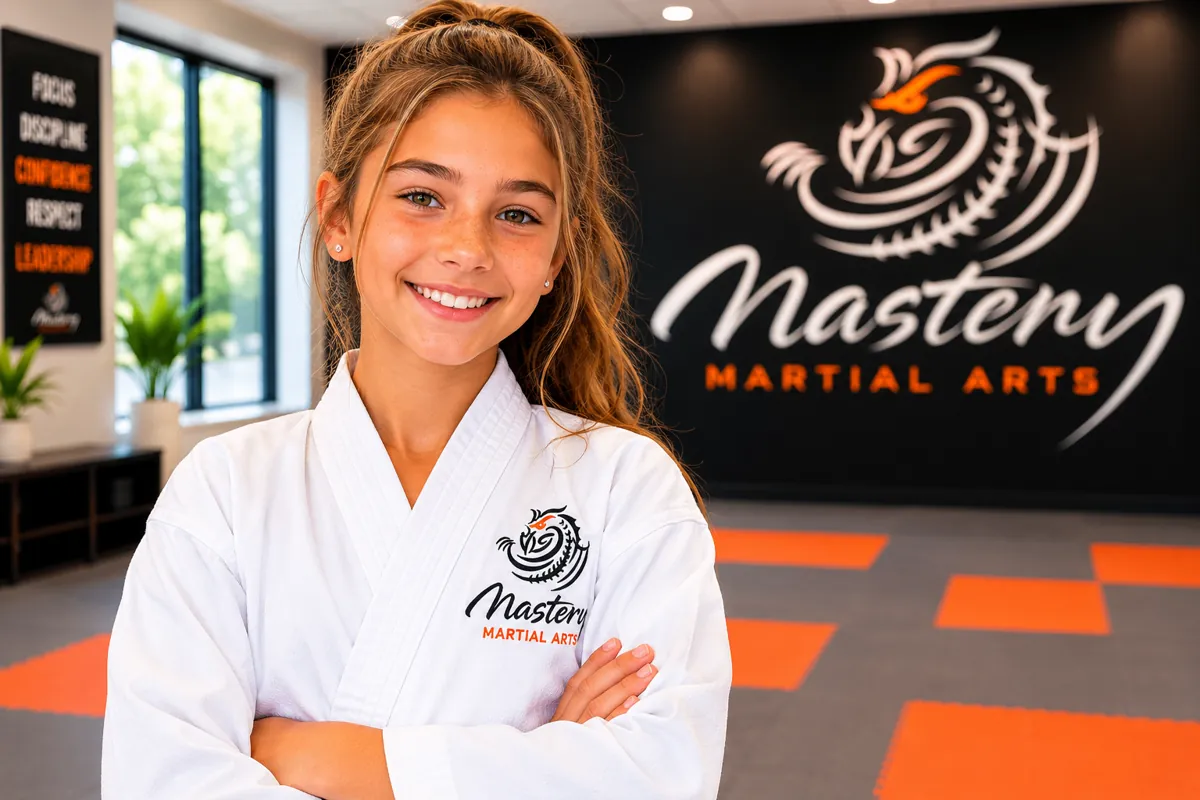
Confidence for teenagers does not appear at 14 by accident. It is built before they get there. Preparing for middle school and preparing for high school is about giving a child the inner foundation they will need before the social, academic, and emotional pressure intensifies. Pre-teens who arrive at those stages with confidence, leadership, decision-making skills, and strong character have a meaningful head start.
Decision making becomes especially important during the teenage years. Pre-teens who have been coached to pause, think, and choose intentionally are far more likely to make decisions they can be proud of when the stakes get real. The habits practiced now — staying calm, regulating emotion, following through, standing for something — become the muscles they rely on later.
Independence at this age does not mean being left alone. It means knowing how to handle yourself well when no one is reminding you. Mastery Martial Arts™ trains that kind of independence through structure, accountability, mentorship, and visible progress. The goal is not just a confident pre-teen. The goal is a teenager — and eventually a young adult — who can lead themselves through whatever comes next.
Curious what your child will experience?
See Schedule & PricingWhat parents want help with
For pre-teens who second-guess themselves, hesitate socially, or need stronger self-belief before the teenage years arrive.
For students who are ready to use their voice, set an example, and step into greater maturity instead of blending into the background.
For children who get distracted easily, lose follow-through, or need better attention and mental discipline in school and life.
For families who want stronger accountability, better habits, and a child who can stay steady even when something feels hard.
For pre-teens learning to own their choices, follow through, carry themselves well, and take pride in the effort they give.
For children navigating stress, anxiety, frustration, and social pressure who need healthier ways to recover, respond, and keep going.
Because confidence becomes a competitive advantage in life.
Structured class experience
Every class is designed to create structure, growth, and confidence. Students know what is expected, what they are working on, and how progress is built.
Students begin with movement, mindset, and immediate structure so they can release stress, lock in mentally, and transition into focused training.
Pre-teens work on age-appropriate martial arts technique, balance, control, coordination, and body awareness while learning how to stay coachable.
Students practice with others to build timing, communication, composure, respect, and the ability to stay steady under pressure.
Instructors connect physical training to leadership habits like speaking clearly, setting an example, helping others, and showing maturity.
Students are reminded that progress is something they create through effort, consistency, and the willingness to keep showing up.
Wins are noticed so students leave feeling proud, seen, encouraged, and motivated to keep building momentum.
Want pricing and class times?
Click for Schedule & PricingThe first 90 days
The biggest changes often happen outside the dojo.
Parents notice their pre-teen standing taller, trying new things, and walking into rooms believing they belong there.
Posture, eye contact, and presence shift. Many parents describe a child who suddenly looks more grounded and self-assured.
Instead of folding, shutting down, or quitting, children begin pausing, resetting, and choosing the harder right path.
Quieter pre-teens become more willing to ask questions, share opinions, and use their voice with peers and adults.
Parents see their pre-teen helping others, setting an example, and stepping into responsibility instead of away from it.
The inner voice gets stronger. Children begin describing themselves with more self-belief and less self-doubt.
The right fit
The program is designed around how pre-teens ages 10–12 actually grow, lead, and gain confidence.
Pre-teens who second-guess themselves benefit from earned wins that quietly rebuild self-belief from the inside out.
Practice greeting, partnering, and engaging in a supportive room helps pre-teens carry that confidence into school and friendships.
Pre-teens are coached to set an example, help others, and step into responsibility instead of waiting on the sidelines.
Repeated, manageable challenge with strong coaching rewires how a child responds when something gets hard.
Instructors model respect, discipline, and character — and pre-teens begin mirroring what they see consistently around them.
Confidence, voice, and self-trust make it easier for pre-teens to stay themselves when the room is pulling another way.
Structure, accountability, and follow-through become trainable habits that translate to school, home, and personal goals.
Pre-teens build the confidence, leadership, and character they will lean on long before middle school and high school arrive.
Ready to book your free intro lesson?
See Schedule & PricingCore skills before the teen years
Ages 10–12 are a critical developmental stage. The skills built now become the foundation pre-teens lean on through middle school, high school, and beyond.
Trusting yourself to act under pressure — built through earned challenge, not empty praise.
Setting an example, helping others, and carrying yourself with maturity others can rely on.
Speaking clearly, listening fully, and responding with respect in any room.
Recovering quickly from mistakes and staying steady when something gets hard.
Owning your effort, your routines, and the outcomes that follow them.
Doing the right thing even when it is hard, boring, or unsupervised.
Pausing, thinking, and choosing intentionally instead of reacting to whoever is loudest.
Becoming the kind of person you would be proud to be known as, on and off the mat.
More than martial arts
Parents often tell us they aren't looking for another activity.
They're looking for an advantage.
They want their child to enter middle school and the teenage years with confidence, leadership skills, resilience, strong values, and the ability to make good decisions.
Martial arts becomes the vehicle.
Personal development becomes the outcome.
Most activities
Keep kids busy.
Entertainment ends when the season does. The child returns to the same starting point with little carried forward.
Mastery Martial Arts™
Prepares them for life.
Confidence, leadership, resilience, and character become trainable habits — exactly what pre-teens will rely on for years.
Most activities
Reward performance.
The naturally gifted thrive. The rest learn to stay quiet, blend in, or avoid being seen trying.
Mastery Martial Arts™
Rewards growth.
Every pre-teen is coached toward their next step. Effort, attitude, and progress are what earn recognition.
Have questions? Start with a free visit.
Click for Schedule & Pricing
Parent success story
“My 12 year old son absolutely loves the program. Through their guidance he has learned self-discipline, improved his athletic abilities, and developed valuable life skills through both regular classes and the Leadership Program.”
Why martial arts is different
Other Activities
Entertainment
Mastery Martial Arts™
Personal Development
Your child is not just staying busy. They are building identity, confidence, discipline, and life skills that carry into school, relationships, and the future.
Other Activities
Participation
Mastery Martial Arts™
Leadership Development
Students are challenged to speak up, set an example, help others, and become someone younger students can look up to.
Other Activities
Seasonal Growth
Mastery Martial Arts™
Year-Round Growth
Transformation is built through consistency. Martial arts gives families a steady environment where growth does not disappear when a season ends.
Other Activities
Skill Building
Mastery Martial Arts™
Character Building
Technique matters, but how a child handles pressure, mistakes, responsibility, and perseverance matters even more.
Other Activities
Short-Term Fun
Mastery Martial Arts™
Long-Term Transformation
The goal is not just a good afternoon. The goal is a stronger, more resilient, more capable young person over time.
See how it fits your family.
See Schedule & PricingCharacter development
Respect, integrity, responsibility, accountability, leadership, and perseverance do not become real simply because adults talk about them. They become real when a child has to practice them while things are difficult, uncertain, frustrating, or uncomfortable.
That is why challenge matters. In martial arts, students are asked to stay present, keep trying, respond to correction, control emotion, show respect, and carry themselves with maturity even when they would rather avoid, rush, or give up. Those moments build character because they ask students to become someone stronger than their first impulse.
The goal is not creating better martial artists. The goal is helping kids become stronger human beings. Martial arts is simply the vehicle. The deeper work is who a student becomes while training: more steady, more honest, more respectful, more disciplined, and more capable of handling life well.
Real parent reviews
Holly Gauvin
Warwick, RI
My 12 year old son absolutely loves the program. Through their guidance he has learned self-discipline, improved his athletic abilities, and developed valuable life skills through both regular classes and the Leadership Program.
Jennifer Poirier
Smithfield, RI
Before he was shy, hesitant and didn't have a whole lot of confidence. Now he speaks up, stands out and walks and speaks with confidence.
Adrienne Silveira
Warwick, RI
I've seen such a big improvement in my son's self-esteem and confidence, both in class and at home. The positive environment really motivates him to do his best and keep growing.
Felicia Dionne
Smithfield, RI
Mastery is teaching our daughter to be a leader, building her confidence, helping her anxiety, and giving her a better ability to navigate her emotions and responses to stress.
Abigail Wheeler
Cumberland, RI
I've gained so much confidence and friends. I was encouraged so much that I became a legacy member.
Jasmine Pang
Barrington, RI
Martial arts teaches confidence, resilience and gives a kind of inner armor that doesn't show up on the outside but changes everything on the inside.
Dr. Rose Leandre
Barrington, RI
They've developed so much confidence, self-esteem, and awareness. Every student feels like they belong in this welcoming, family-friendly environment.
Suzanne Austin
Barrington, RI
The growth I have seen in their confidence and sense of self has been remarkable. Mastery helps children feel supported and proud while learning respect, discipline, and perseverance.
Ready to see a class in action?
Click for Schedule & PricingLeadership development
Leadership starts when a child learns to speak clearly, take responsibility, help younger students, set an example, and make decisions they can be proud of. Those habits do not need to wait until adulthood. They are trainable now.
In the Pre-Teen Martial Arts program, students practice communication, accountability, responsibility, confidence, and goal setting in ways that feel real. They learn that leadership is not status. It is service, consistency, and how you carry yourself when people are watching and when they are not.
For students who are ready, the Leadership Program creates an even stronger pathway. It gives pre-teens the chance to grow in public speaking, helping younger students, modeling discipline, and becoming someone others can look to with respect.
Belonging matters
Friendships, positive role models, healthy community, encouragement, and support are not side benefits. They are part of how children become who they are. Pre-teens are especially shaped by the people around them, which means the environment they spend time in matters enormously.
Children become like the people they spend time around. When they are surrounded by students who are being coached to show respect, build confidence, help others, and keep growing, that culture starts shaping them too. Belonging does not mean fitting into every crowd. It means finding a community that brings out your child’s best.
At Mastery Martial Arts™, students are encouraged, supported, and challenged inside a healthy community where growth is normal. That kind of belonging can change how a child sees themselves and what they believe is possible.
Curious what your child will experience?
See Schedule & PricingFAQs
Locations
615 Greenwich Ave, Warwick, RI 02886
1026 Tiogue Ave, Coventry, RI 02816
1386 Atwood Ave Unit #4, Johnston, RI 02919
Apple Valley Mall, 445 Putnam Pike, Smithfield, RI 02917
286 Maple Ave Suite 5, Barrington, RI 02806
517 Main St, East Greenwich, RI 02818
1725 Mendon Rd, Cumberland, RI 02864
429 S Washington St #2, North Attleborough, MA 02760
Martial Arts Ages 10–12 in Warwick gives families across Warwick, Cranston, West Warwick, and East Greenwich a trusted home for confidence, leadership, resilience, and self-discipline before the teenage years. The program is built around real coaching, character development, and visible progress — preparing pre-teens for middle school, high school, and life. Parents searching for martial arts for ages 10–12 in the Warwick area will find a structured environment where quiet pre-teens find their voice and every student is coached toward earned confidence.
Visit Warwick locationMartial Arts Ages 10–12 in Coventry serves families across Coventry, West Warwick, West Greenwich, and Foster who want a meaningful way to build confidence, leadership, resilience, and self-discipline in their pre-teen. The program emphasizes character development, accountability, and progress pre-teens can see and feel. For Coventry-area parents searching for martial arts for ages 10–12, Mastery delivers warm coaching, strong standards, and a place where pre-teens grow into someone they are proud to be.
Visit Coventry locationMartial Arts Ages 10–12 in Johnston gives families across Johnston, North Providence, Scituate, and Cranston a structured place for confidence, leadership, resilience, and self-discipline at ages 10–12. Classes reinforce listening, follow-through, recovery from mistakes, and earned progress through coaching that meets each pre-teen where they are and stretches them into who they want to become.
Visit Johnston locationMartial Arts Ages 10–12 in Smithfield helps pre-teens across Smithfield, Greenville, Lincoln, and North Providence build confidence, leadership, resilience, and self-discipline in a structured, encouraging environment. Parents searching for martial arts for ages 10–12 near Smithfield want more than activity — they want a place where their pre-teen learns to keep trying, speak up, and prepare for the teenage years with character and self-belief.
Visit Smithfield locationMartial Arts Ages 10–12 in Barrington helps pre-teens across Barrington, Warren, Bristol, and Riverside build confidence, leadership, resilience, and self-discipline through structured, age-appropriate training. Parents searching for martial arts for ages 10–12 near Barrington often want a place where character is coached every class — and where every student is challenged to keep growing.
Visit Barrington locationMartial Arts Ages 10–12 in East Greenwich serves families across East Greenwich, Warwick, North Kingstown, and Exeter looking for a meaningful way to build confidence, leadership, resilience, and self-discipline in their pre-teen. The program emphasizes earned progress and the habits pre-teens lean on every day — at school, at home, and around peers.
Visit East Greenwich locationMartial Arts Ages 10–12 in Cumberland serves families across Cumberland, Lincoln, North Smithfield, and Woonsocket who want to build confidence, leadership, resilience, and self-discipline in their 10, 11, 12, or 13 year old. The program is designed around real character development and visible progress — exactly the foundation pre-teens need before middle school and high school.
Visit Cumberland locationMartial Arts Ages 10–12 in North Attleboro helps families across North Attleboro, Plainville, Attleboro, and Mansfield develop confidence, leadership, resilience, and self-discipline in their pre-teen. Classes are built around coaching, accountability, and consistent progress — preparing pre-teens with the inner foundation they will need long before high school arrives.
Visit North Attleboro locationWant pricing and class times?
Click for Schedule & PricingFor parents
How pre-teens ages 10–12 build durable confidence through challenge, coaching, and earned progress.
Read moreThe small habits that quietly form leadership identity in pre-teens before the teenage years.
Read moreHow posture, voice, eye contact, and self-control reduce the likelihood of being targeted.
Read moreHow pre-teens learn to recover from setbacks and keep going when things feel hard.
Read moreRespect, responsibility, perseverance, and the habits that shape who pre-teens become.
Read moreWhy accountability, follow-through, and ownership matter most between ages 10 and 13.
Read morePopular parent searches
Ready to book your free intro lesson?
See Schedule & PricingFinal step
Every confident teenager starts somewhere. Every leader starts somewhere. Every black belt starts somewhere.
No Experience Needed.
No Pressure.
Just One Visit To See If Your Child Loves It.
About Mastery Martial Arts™
33+
Years Serving Families
1,200+
Five-Star Reviews
3 States
Rhode Island and Massachusetts
Helping children build confidence, focus, discipline, leadership, and resilience through martial arts training.
Why this stage matters
Between ages 10 and 13, childhood starts changing in ways many parents can feel but struggle to fully explain. The world gets louder. Social pressure becomes more real. Comparison becomes more constant. Children become more aware of what other people think, how they fit in, who seems more confident, and where they feel behind. The emotional stakes go up. This is often the season when a child who once seemed open, playful, or carefree starts becoming quieter, more self-conscious, more cautious, or more easily discouraged. It is not because something is suddenly wrong. It is because identity is forming, and outside voices begin competing with their inner one.
Parents often notice the shift gradually. Their child begins second-guessing themselves more. They worry more about what other kids think. They hold back in class, in sports, or in new social situations. They start saying things like “I’m not good at that,” “Everyone else is better,” or “I don’t want to look stupid.” For some kids, the change shows up as self-doubt. For others, it looks like anxiety, withdrawal, irritability, perfectionism, or avoiding things that feel uncertain. The common thread is that the child’s confidence is no longer simply about whether something is fun. It is becoming part of how they see themselves.
This is also the stage where peer pressure starts becoming more emotionally powerful. A child might know the right decision and still feel pulled by belonging. They may want to fit in so badly that they begin shrinking parts of themselves. They notice who gets accepted. They notice who gets laughed at. They notice who seems naturally cool, athletic, outgoing, smart, or socially effortless. And in a world shaped by group chats, social media, and constant exposure to everyone else’s highlights, comparison can become almost nonstop. That comparison is exhausting for adults. For a pre-teen whose self-concept is still forming, it can be deeply destabilizing.
School pressure also rises significantly during these years. Teachers expect more independence, more organization, more emotional control, and more personal responsibility. Academic expectations increase. Friendships become more layered. Conflicts feel more personal. Embarrassment feels bigger. A child who is unsure of themselves may start playing life small to avoid the discomfort of standing out, speaking up, risking failure, or being seen trying. That is why many families say they are not just looking for an activity. They are looking for something that helps their child become stronger on the inside.
Confidence at this age is not about being loud, dominant, or naturally outgoing. Healthy confidence means a child can trust themselves. It means they can walk into a room without collapsing internally. It means they can try something hard without needing a guarantee. It means they can recover from mistakes instead of defining themselves by them. It means they can hear outside opinions without being controlled by every one of them. That kind of confidence does not usually happen by accident. It is built through challenge, coaching, repetition, and an environment that reinforces who a child is becoming.
Parents often see the warning signs before they have words for them. Their child stops volunteering answers. They avoid eye contact with adults. They need more reassurance than they used to. They hesitate socially. They get overwhelmed faster. They talk down to themselves. They back away from challenge or shut down when something does not come easily. Some become more passive. Some become more defensive. Some become more anxious. Some try to disappear into whatever keeps them from feeling exposed. These patterns are more common than many families realize, and they do not mean a child is weak. They mean a child needs an environment that helps them practice strength.
Emotional resilience matters just as much as confidence during these years. Pre-teens are learning how to handle disappointment, uncertainty, social stress, setbacks, and the uncomfortable gap between who they are now and who they want to become. Without strong support, many children start avoiding that gap. They avoid hard conversations. They avoid situations where they might not be the best. They avoid trying in public. They avoid anything that feels like it could expose insecurity. But resilience is not built by protecting children from all discomfort. It is built by helping them face manageable challenge while staying supported, steady, and connected.
This age range is also one of the most important windows for leadership development. Leadership does not start when a child becomes an adult. It starts when they learn to use their voice, take responsibility, regulate emotion, follow through, and act with character even when nobody is making them. A pre-teen who learns those habits now is better prepared for the teenage years ahead. They are better equipped to handle social pressure, make strong choices, and become someone who influences others positively instead of being influenced by everything around them.
Belonging matters deeply too. Children become like the people they spend time around. If their environment normalizes apathy, excuses, comparison, or disrespect, those patterns can become familiar. If their environment normalizes encouragement, accountability, effort, leadership, and personal growth, those patterns can become familiar instead. Parents cannot control every outside influence, but they can give their child a place where the culture supports who they want their child to become. That matters enormously between 10 and 13, because identity is still highly trainable.
At Mastery Martial Arts™, we help kids build an inner voice stronger than outside pressure. We do that by combining structure, challenge, mentorship, recognition, leadership development, and a positive community that keeps reinforcing the same core message: you are capable, you can grow, and you can become stronger than what is trying to shake you. That is why this age group deserves more than generic recreation. These years are too important for that. When the world gets louder, kids need something that helps them get stronger, steadier, and more confident from the inside out.
1,200+ Five-Star Reviews
Verified by parents
Helping Children Build Confidence
Since 1992
8 Locations
Rhode Island & Massachusetts
Beginner Friendly
No experience required
Give your child the confidence, focus, leadership, and resilience that lasts a lifetime.