Ages five and six are a remarkable stage of childhood. A great deal is changing all at once: children are becoming more verbal, more social, more aware of rules, more aware of themselves, and more exposed to environments that ask more from them. This is often the age when parents begin to notice that their child is no longer simply “little.” They are entering a stretch of development where patterns start to stick. How they respond to correction, how they handle frustration, how they participate in groups, and how they think about themselves begin to carry more weight.
That is exactly why so many families begin searching for karate for 5 year olds, karate for 6 year olds, confidence classes for kids, focus classes for children, and discipline classes for kids at this stage. Parents can feel that these years matter. They can sense that now is a powerful time to help a child build a healthier foundation before school pressures, comparison, avoidance patterns, or self-doubt grow stronger.
School readiness goes beyond letters and numbers.
When families think about school readiness, they often think about academic basics. But for many children, the bigger challenge is not academic ability. It is whether they can listen in a group, follow multi-step instructions, wait their turn, transition between activities, recover after mistakes, and keep participating when something feels uncomfortable. These are performance habits. They shape how well a child can use what they know.
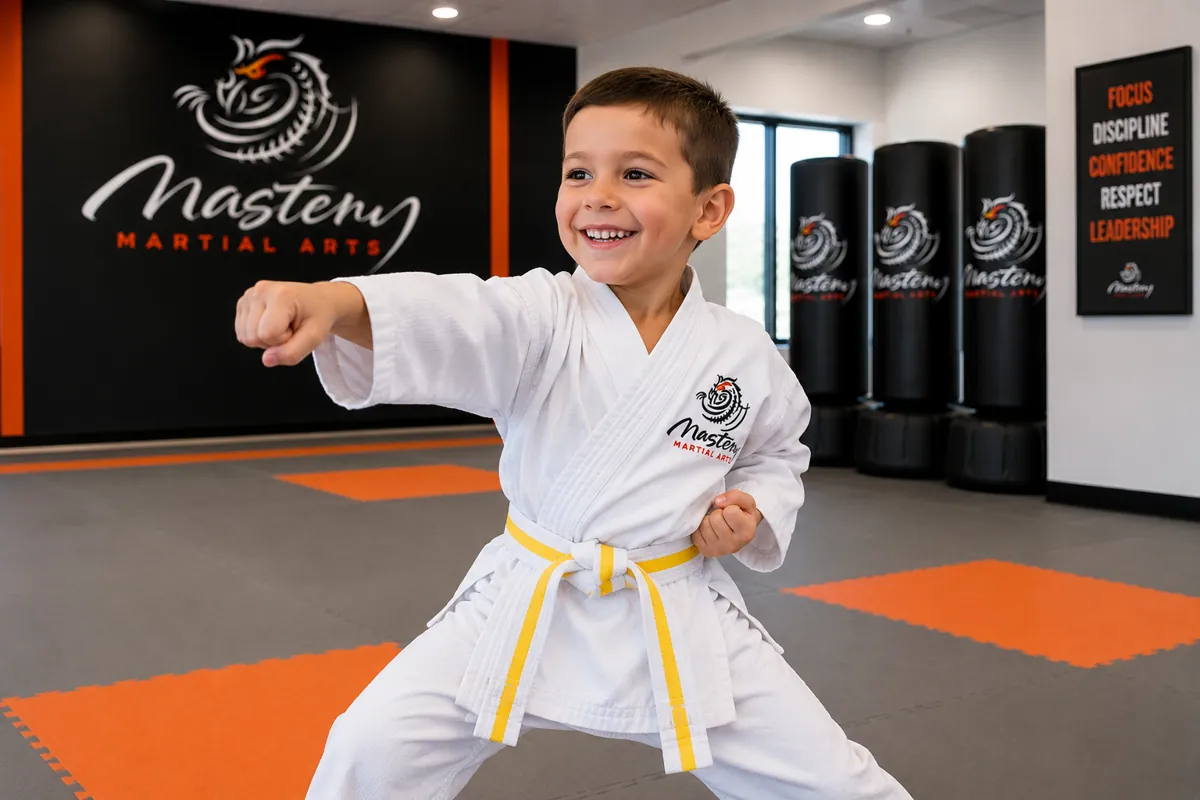
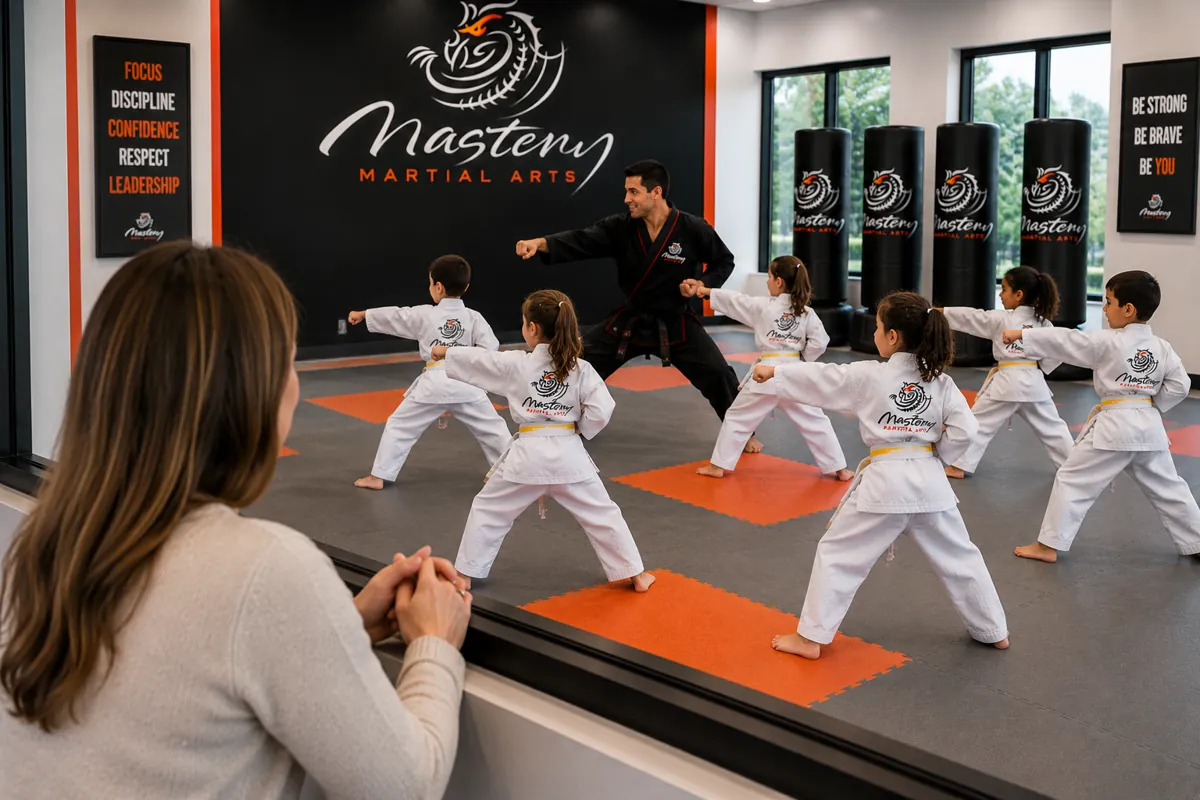
Martial arts for 5 year olds and martial arts for 6 year olds can support those habits because class constantly reinforces body control, attention, listening, and follow-through. A child learns to stand in a spot, respond to a cue, notice a pattern, and keep trying even when the skill is not automatic yet. Those are exactly the kinds of demands children encounter at school every day.
Listening becomes a life skill, not just a behavior issue.
At ages five and six, many children still struggle to separate impulse from instruction. They hear directions, but they may not yet process them efficiently. They move before they think. They talk over others. They lose focus mid-task. Parents sometimes interpret this as defiance when in reality it is often developmental immaturity mixed with under-practiced attention.
In a structured martial arts class, listening is practiced over and over in an active, memorable setting. Children learn that listening helps them succeed. It helps them know what comes next. It helps them feel capable. This matters because children are much more likely to strengthen a skill when it feels useful rather than when it feels like constant correction.
Focus is still fragile at this age.
Focus in early childhood is rarely a fixed trait. It is often situational. A child may focus deeply on something they love and struggle everywhere else. That does not mean they cannot build stronger attention. It means they need guided repetition in environments that are engaging enough to hold interest and structured enough to train control.
That is one reason focus classes for children are so appealing to parents of 5- and 6-year-olds. Martial arts provides a rare combination: movement, variety, visible goals, and clear expectations. Children are not asked to sit still for long stretches with no outlet. Instead, they are asked to regulate attention while doing something active and meaningful. That often produces far better buy-in.
Social development is accelerating.
Ages five and six are also deeply social years. Children are becoming more aware of peers, fairness, belonging, comparison, and approval. They begin noticing who seems brave, who speaks up, who gets praised, and where they fit. For confident children, this can be energizing. For more cautious children, it can be intimidating.
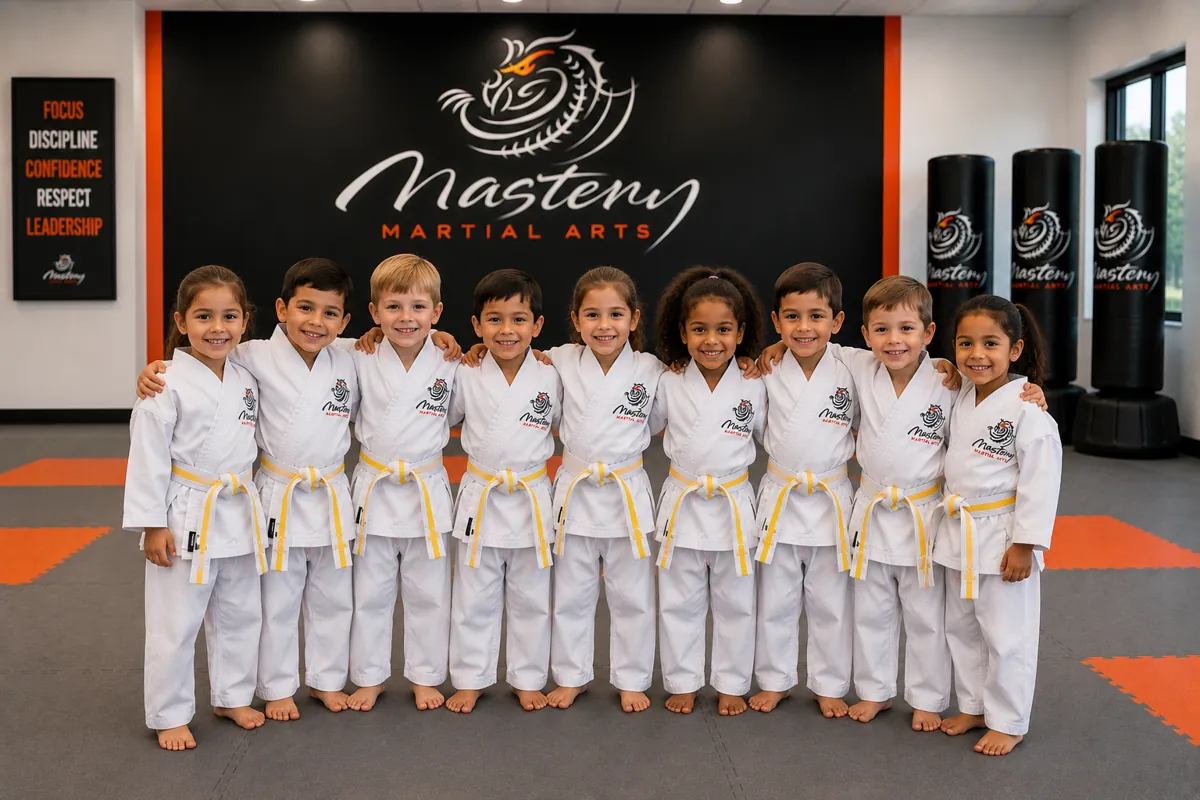
That is why parents often say, “My child is shy around new people,” or “My child needs better confidence.” They are noticing how their child participates socially. A positive martial arts environment can help because it gives children repeated chances to succeed in front of others without requiring them to be the loudest or most athletic child in the room. Progress is personal, but it happens in community. That combination helps many children feel safer socially.
Friendships become more meaningful.
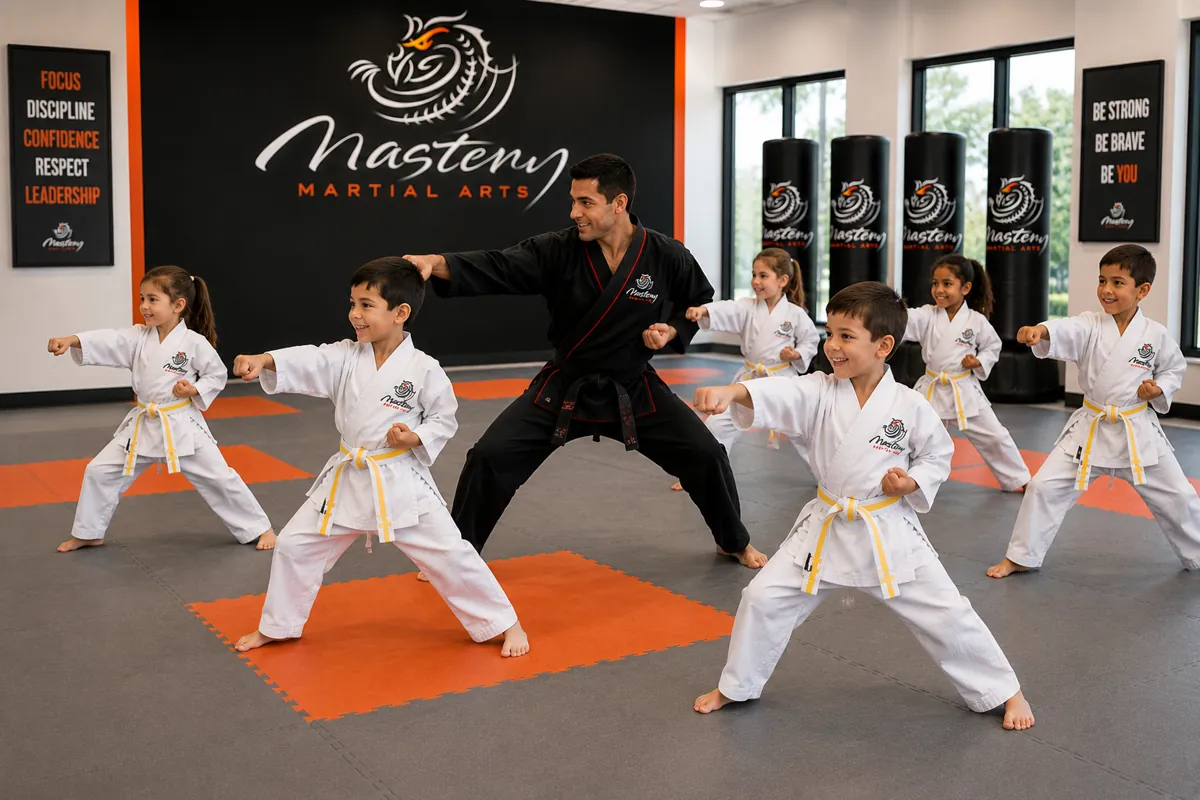
At this age, friendship starts to influence identity. A child who feels included often carries themselves differently. A child who feels uncertain or left out may become more withdrawn, more reactive, or more hesitant to try. Martial arts supports friendship in a way that many parents appreciate because children train beside one another, encourage one another, and learn how to respect shared space and shared effort.
This is especially important for children who are still learning how to join groups confidently. A well-run class does not only teach individual skill. It teaches how to participate with others, how to take turns, how to applaud progress, and how to be part of a positive environment. Those experiences matter beyond the mat.
Emotional regulation is under construction.
Five- and six-year-olds can feel big feelings very quickly. Their disappointment is real. Their embarrassment is real. Their frustration is real. Yet their tools for managing those feelings are still developing. Many parents start looking for discipline classes for kids because they are not just trying to correct behavior. They want their child to handle emotions more effectively.
Martial arts can help because it makes frustration visible and coachable. A child misses a move. They lose balance. They forget a sequence. They have to wait. They do not earn something immediately. These are all moments where a skilled instructor can step in and teach recovery. Over time, children learn that mistakes are not emergencies. They are part of growth.
Resilience is easier to build early than rebuild later.
When a child repeatedly avoids challenge, melts down under pressure, or decides they are “not good at things,” that pattern can become sticky. The earlier children learn that discomfort is survivable and effort leads somewhere, the more resilient they tend to become. This is one of the greatest long-term benefits of an age-specific martial arts program.
Resilience at ages five and six does not look dramatic. It looks like trying again. It looks like staying on the mat. It looks like taking instruction without falling apart. It looks like not needing instant success in order to keep going. These are small but foundational traits that influence how a child approaches learning for years to come.
Growth mindset starts with experience, not vocabulary.
Many parents want their children to have a growth mindset, but young children do not internalize that through speeches. They internalize it through repeated evidence. When a child sees that practice changes what they can do, they begin to believe effort matters. Martial arts is full of that evidence. A child who could not do a skill last month can do it now. A child who was nervous last season walks in smiling this season.
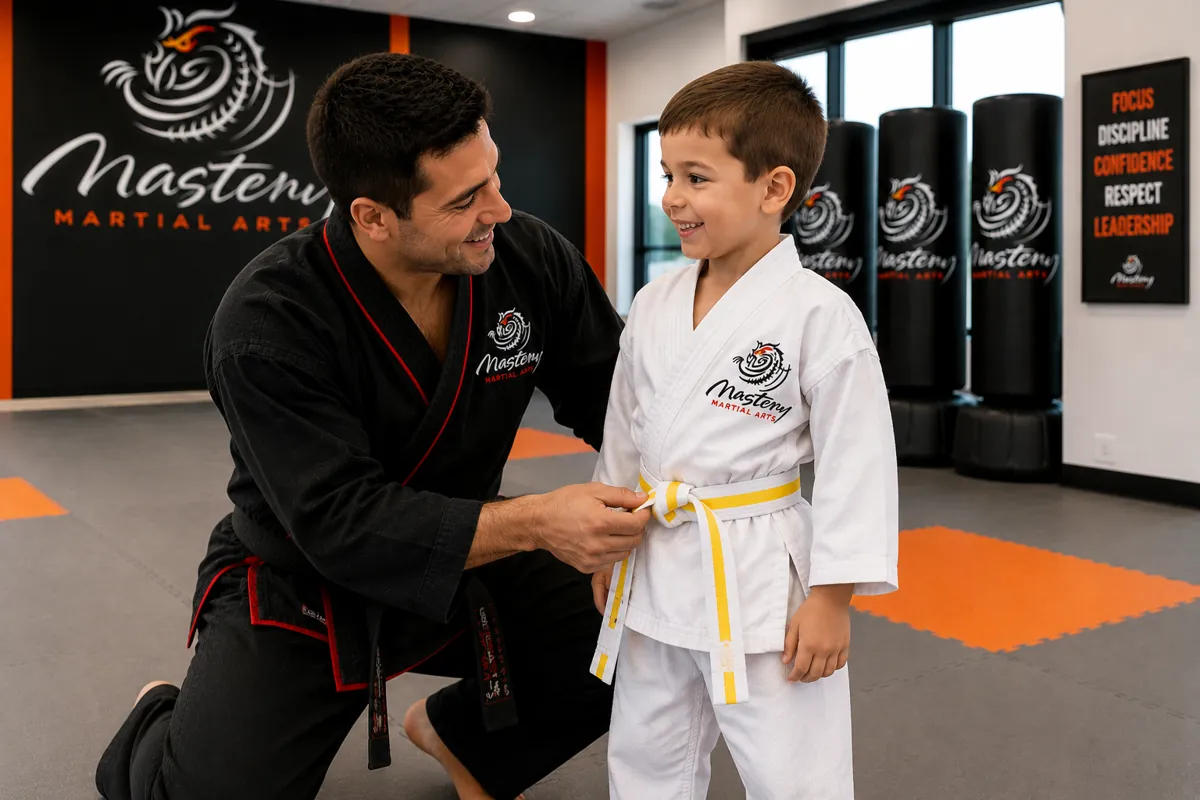
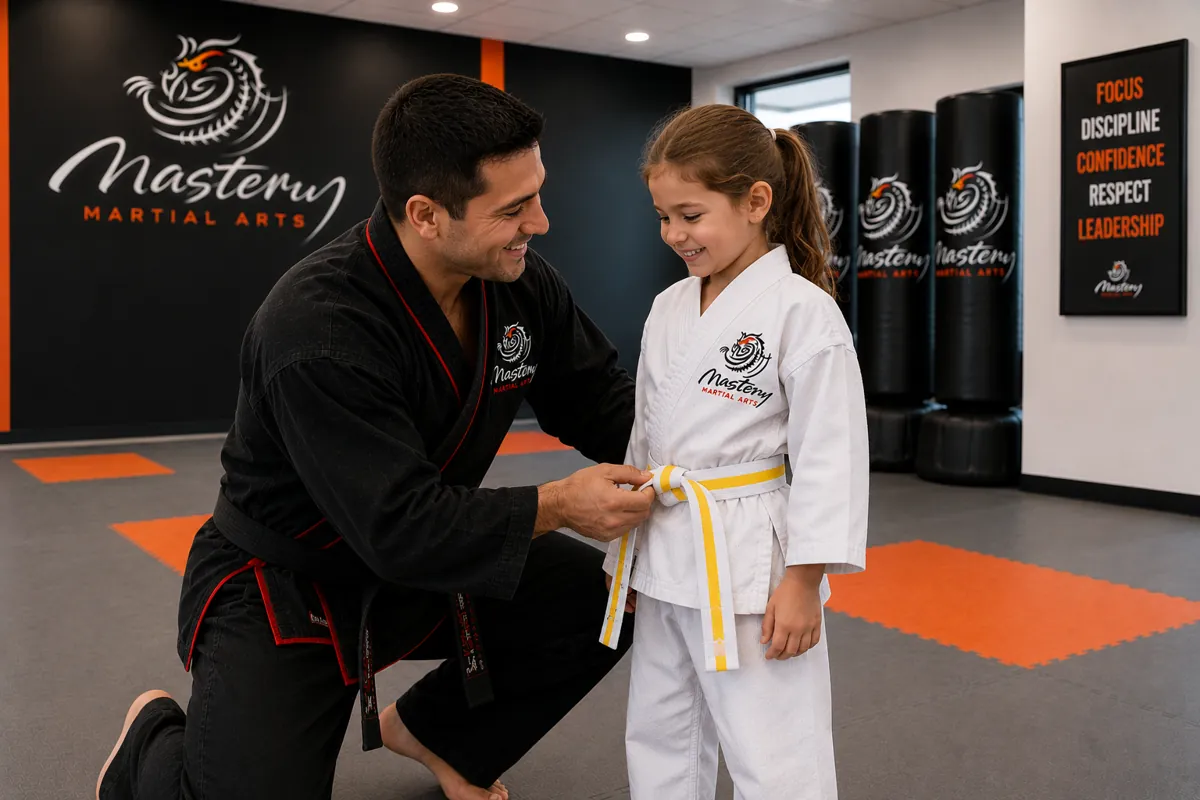
This is why the visible progress systems in martial arts work so well for this age. Stripes, recognition, praise, and belts help children see that growth is not random. It is connected to action. That lesson becomes part of identity. Instead of “I can’t,” children start moving toward “I can’t do it yet.”
Confidence at 5–6 is identity-level development.
Real confidence is not loudness. It is not performance. It is not pretending. It is the growing belief that “I can handle this,” “I can learn,” “I can recover,” and “I can participate.” At ages five and six, that belief is still highly moldable. That makes this stage uniquely important.
When parents search for kids martial arts near me at this age, they are often searching for more than an activity. They are searching for help shaping how their child sees themselves before the world does too much of that shaping for them. A strong Little Dragons™ program meets that need by combining movement, structure, praise, accountability, progress, and belonging in one experience.
Why this matters for parents now.
Parents do not need to wait for a major problem before investing in confidence, listening, focus, or discipline. In fact, the best time to build those qualities is often before the gaps become painful. Early confidence supports later courage. Early focus supports later learning. Early resilience supports later independence.
That is why ages five and six matter so much. These years are not just a bridge between preschool and elementary school. They are a forming stage for identity, behavior, and self-belief. With the right coaching and environment, they can become the years when a child begins to think, maybe for the first time in a durable way: “I can do this.”